

-
-
-
Application

-
Core Technologies
-
21
2022
-
11
Hubei Sinyopto Optoelectronics' Industrialization Project for New Mini/Micro LED Display Devices and Modules Achieves Key Milestone
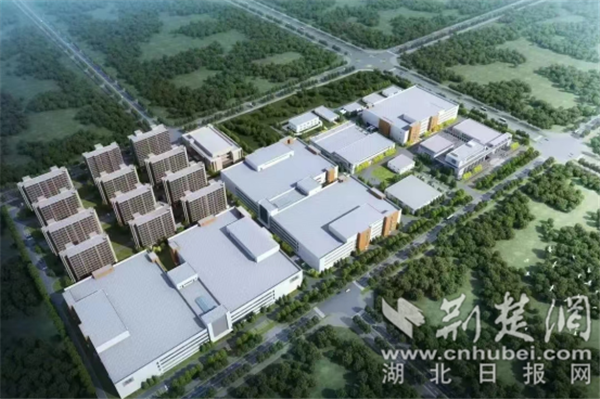
Project Visualization
Jingchu Net (Hubei Daily Online) reports (correspondents Xing Tingshi and Xu Zhi): Recently, the civil engineering phase of Hubei Province's key project—the industrialization project for Sinyopto Optoelectronics' innovative Mini/Micro LED display devices and modules—constructed by China Construction Third Bureau No. 2 Company's Central China Division, has been fully completed and has now been seamlessly handed over to the cleanroom renovation and equipment installation teams.
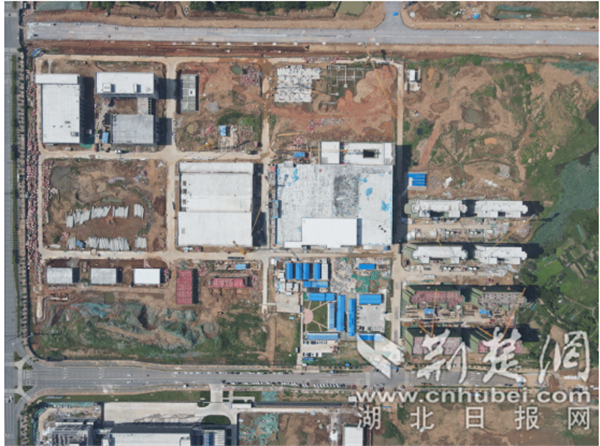
Real-life construction site photos from the project. Photo provided by the correspondent.
The Hubei Sinyopto Optoelectronics Project, located in the Gedian Economic Development Zone, is a key component of China's largest LED display device production base. The project is dedicated to developing the world's most advanced display packaging technologies, aiming to become a global leader in Mini & Micro packaging solutions. By doing so, it will help the industry address the longstanding challenges of "chip shortages and screen limitations," paving the way for the emergence of a new "chip-screen-device-core" era. Once completed, the project will significantly accelerate the industrialization of Mini/Micro LED display devices, fostering collaboration across the upstream and downstream sectors to build a highly innovative, cutting-edge display device supply chain. With its own proprietary product intellectual property rights and influential industry presence, the project will play a pivotal role in positioning the entire industrial park as the world's foremost hub for LED display device manufacturing. Moreover, it will greatly enhance cross-regional industrial cooperation between Wuhan and Ezhou, further expanding the robust "Optics-Chips-Screens-Devices-Networks" ecosystem.
"Total Site Planning" control ensures end-to-end dynamic management. The project operates within a cyclical framework that integrates planning, comprehensive site layout, on-site implementation, and drone-based monitoring, creating a "PDCA-style Total Site Control System." This system provides real-time insights into construction site conditions and progress, enabling efficient and seamless transitions of the factory’s overall layout. It also aligns with a regional responsibility-based management model, allowing for real-time updates and coordinated control of the construction site layout. Additionally, the project implements a standardized construction approach based on the principles of "Plan First, Model-Led," supported by robust quality management systems such as the "Quality Management Plan," "Model-Led Implementation Plan," and "Measures to Prevent Common Quality Issues." These frameworks ensure rigorous adherence to the "Four-Inspection System" across nearly 100 critical construction processes, delivering dynamic, full-process quality management and ultimately guaranteeing high-quality project execution.
The "Zongheng" plan ensures efficient execution and timely project delivery. The project has fostered a strong "start with full speed" atmosphere right from the moment crews enter the site. A comprehensive implementation plan—structured both horizontally and vertically—has been developed, supported by 20 dynamic adjustment meetings throughout the process. These sessions focus on monitoring, corrective actions, analysis, and fine-tuning to keep the project on track. The construction sequence is meticulously planned to maximize efficiency and make optimal use of available resources, with scaffolding systems like Pan-Kou frames providing extensive coverage across key areas. To accelerate material handling within and around the facility, forklifts are paired with Pan-Kou unloading platforms, while mechanized methods streamline the transfer of materials between indoor and outdoor work zones. This approach not only speeds up the "fast in, fast out" workflow but also ensures high-quality results, enabling the team to successfully meet critical milestones. As a result, the project achieves significant milestones: completing the ±0 elevation for a 12,000㎡ factory building within one month; finishing the main structural framework for 65,000㎡ in just two months; capping the factory structure 10 days ahead of schedule; and wrapping up the main structural work for 180,000㎡ within six months. Additionally, secondary masonry and plastering tasks for 60,000㎡ are completed ahead of schedule, along with 50,000㎡ of floor slab construction.
Since establishing the grassroots Party branch at the project site, the team has actively explored ways to integrate Party building leadership with production and operations. As a successful pilot initiative, they implemented a system that combines job roles with regional accountability and fixed-amount salary packages, effectively boosting employee enthusiasm and motivation. To strengthen ideological development, the branch secretary delivered engaging Party lessons and launched initiatives like the "Employee Voices Community," fostering open communication and shared values among workers. Amidst the scorching summer heat, the project team went above and beyond by purchasing over 1,000 jin of watermelons and distributing more than 300 sets of cooling medicines, ensuring that frontline workers stayed refreshed and comfortable on-site. Beyond these practical gestures, the project extended its care and support to over 300 workers, even inviting staff from the Gedian Branch of Hubei Provincial Hospital of Traditional Chinese Medicine to provide comprehensive health check-ups for laborers. Through these thoughtful and heartfelt efforts, the Party branch has truly become a resilient "battle fortress"—a vibrant, supportive, and tightly-knit hub where warmth, energy, and determination converge to tackle challenges head-on.
Contact us
Address: Gaoxin 4th Road, Gedian Economic-Technological Development Area, Ezhou City, Hubei Province